
 English
 Español
 Portugues
 Pусский
 Deutsch
 العربية
 ไทย
ไทย Türk dili
 Tiếng Việt


cadre en fibre de carbone pour drone
A carbon fiber frame for a drone is a critical component that significantly influences the performance, durability, and efficiency of the unmanned aerial vehicle (UAV). Carbon fiber is a lightweight, high-strength material composed of thin, tightly woven carbon filaments embedded in a polymer resin. This combination results in a material that is both exceptionally strong and incredibly light, making it an ideal choice for drone frames. Lightweight and StrongOne of the primary advantages of a carbon fiber frame is its high strength-to-weight ratio. Drones require frames that are both sturdy and lightweight to ensure optimal flight performance. Carbon fiber provides the necessary rigidity to withstand the stresses of flight, including turbulence, rapid maneuvers, and potential impacts, while keeping the overall weight of the drone to a minimum. This reduction in weight directly translates to improved battery life, allowing the drone to fly longer and carry heavier payloads. Durability and ResistanceCarbon fiber is known for its exceptional durability and resistance to environmental factors. Unlike metal frames, carbon fiber does not corrode, making it ideal for use in various weather conditions, including rain, humidity, and saltwater environments. Additionally, carbon fiber is highly resistant to fatigue, meaning it can endure repeated stress without weakening over time. This makes it a reliable choice for drones that are used frequently or in demanding applications. Vibration DampingAnother significant benefit of carbon fiber frames is their ability to dampen vibrations. Drones generate vibrations from their motors and propellers, which can affect the stability and quality of the footage captured by onboard cameras. Carbon fiber's inherent vibration-damping properties help to minimize these vibrations, resulting in smoother flights and clearer images or videos. Precision and CustomizationCarbon fiber frames can be manufactured with high precision, allowing for intricate designs that optimize the drone's aerodynamics and performance. The material can be molded into complex shapes, enabling manufacturers to create frames that are tailored to specific applications, whether for racing, photography, agriculture, or industrial inspections. This customization potential ensures that the drone can meet the unique requirements of its intended use. Thermal and Electrical PropertiesCarbon fiber also offers excellent thermal stability, maintaining its structural integrity across a wide range of temperatures. This is particularly important for drones operating in extreme climates. Additionally, carbon fiber is electrically conductive, which can be advantageous for grounding and reducing electromagnetic interference, ensuring the reliable operation of the drone's electronic components. Environmental ConsiderationsWhile carbon fiber is a synthetic material, its long lifespan and recyclability make it a relatively sustainable option compared to other materials. The durability of carbon fiber frames reduces the need for frequent replacements, minimizing waste. Furthermore, advancements in recycling technologies are making it increasingly feasible to reclaim and reuse carbon fiber, further enhancing its environmental credentials. ConclusionIn summary, a carbon fiber frame for a drone offers a combination of lightweight strength, durability, vibration damping, precision, and thermal stability that is unmatched by other materials. These properties make carbon fiber an ideal choice for drone frames, ensuring optimal performance, longevity, and reliability across a wide range of applications. Whether for recreational, commercial, or industrial use, a carbon fiber frame is a key component that enhances the capabilities of modern drones.
Produit
Catégorie:
-
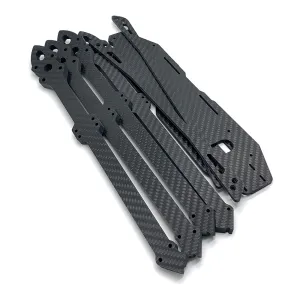
Feuille de fibre de carbone pour fuselage d'UAV
Leur classification: Feuille de fibre de carboneVues: 128Numéro:Temps de libération: 2025-10-10 17:24:06La feuille de fibre de carbone du fuselage d'UAV XYH utilise une fibre de carbone de qualité aérospatiale + une matrice de résine, avec une densité de 1,6 g/cm³ (40 % plus légère que l'aluminium), une résistance de -100 ℃ à 150 ℃ et une résistance à la traction de l'acier 7 à 10 fois. Disponible en 500x500/1000x1800mm, épaisseur 0,5-100mm, il est idéal pour les corps de drones en fibre de carbone, les cadres FPV et les fuselages d'UAV, garantissant durabilité et efficacité de vol.Présentation du produitNotre feuille de fibre de carbone pour fuselage d'UAV est un matériau de qualité supérieure... -
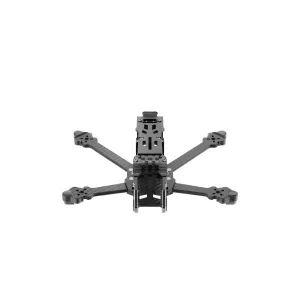
Cadre en fibre de carbone DoMain 3.6
Leur classification: Cadre de drone en carboneVues: 127Numéro:Temps de libération: 2025-10-11 09:56:47Le cadre en fibre de carbone XYH DoMain 3.6 est un cadre FPV de 3,6 pouces avec structure DC (vol stable), alliage d'aluminium 7075 + fibre de carbone, empattement de 170 ± 3 mm, poids de 110 g. Compatible avec DJI-O3/VISTA/RAD MINI 1W VTX, les FC grand public, les accessoires de 3,6 pouces et GoPro. Comprend du matériel complet et des pièces imprimées en 3D, idéales pour le FPV freestyle et longue portée.Présentation du produitConçu pour les passionnés de FPV, le cadre en fibre de carbone DoMain 3.6 intègre une structure DC (bras de drone) et une construction hybride en alliage d'aluminium-fi...
Actualités
Catégorie:
-
[Industry news]Les drones en fibre de carbone offrent des perspectives d'ap...
2025-09-29 10:22:56 -
[Industry news]Comment les produits en fibre de carbone réduisent le poids...
2025-09-16 14:33:06 -
[Industry news]Avantages des drones en fibre de carbone
2025-09-13 14:38:27 -
[Industry news]Fabrication et traitement de pièces en fibre de carbone
2025-09-09 09:57:41 -
[Industry news]Quels sont les avantages mécaniques des drones en fibre de c...
2025-09-09 10:21:40 -
[Industry news]Comment construire un drone en fibre de carbone qualifié ?
2025-09-08 10:25:47 -
[Industry news]Comment pouvons-nous améliorer la précision lors du traiteme...
2025-09-08 10:30:06
Affaire
Catégorie:
Aucun résultat de recherche!
Vidéo
Catégorie:
Aucun résultat de recherche!
Téléchargement
Catégorie:
Aucun résultat de recherche!
Recrutement
Catégorie:
Aucun résultat de recherche!
Produits recommandés
Aucun résultat de recherche!



 Téléphone